Top 5 Painting Line Manufacturers: How Attractivechina Solves Your Coating Bottlenecks
Top 5 Painting Line Manufacturers: How Attractivechina Solves Your Coating Bottlenecks
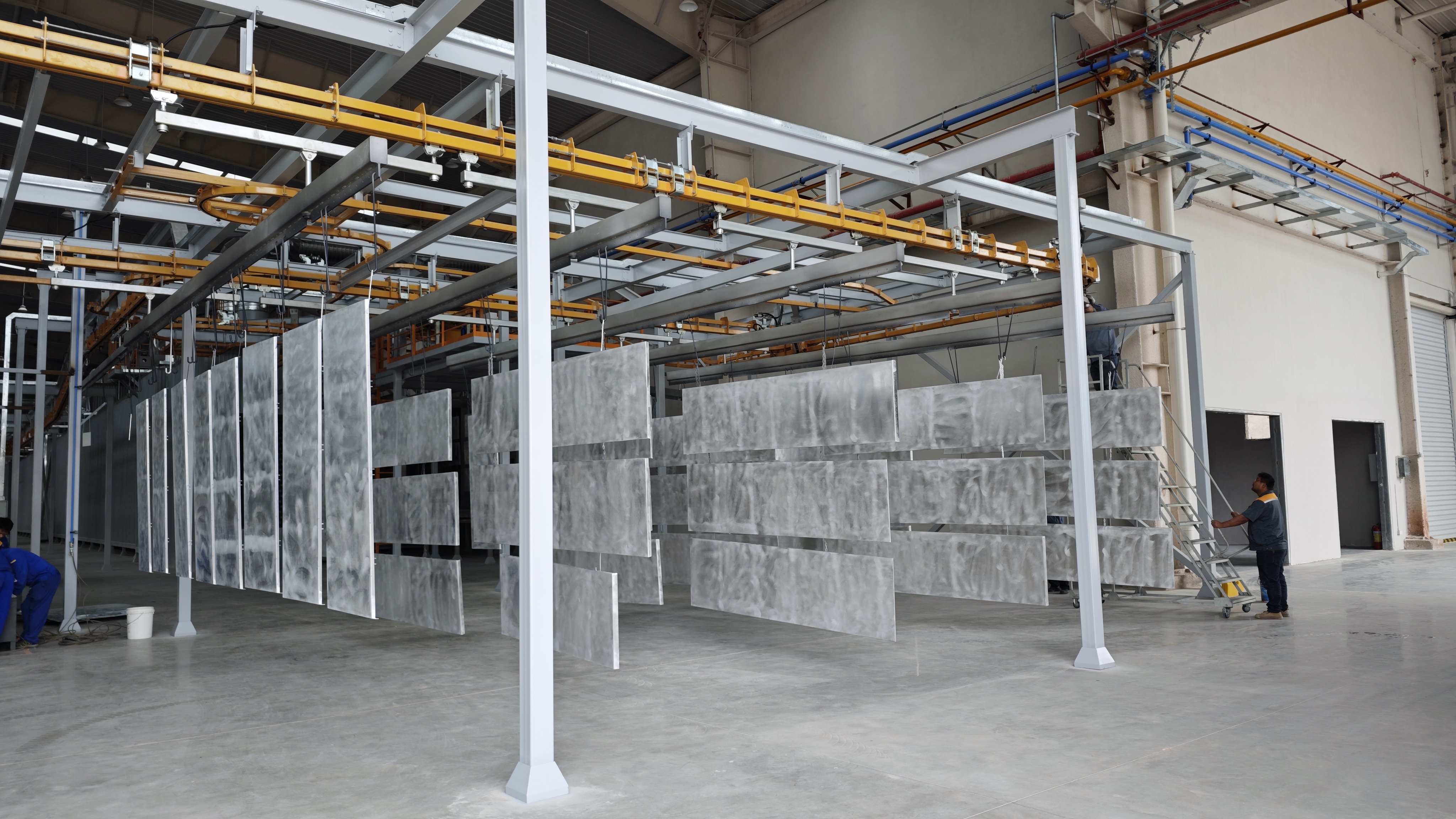
A painting line only earns its capital cost when it removes the constraints that were limiting your factory before it arrived. This guide compares five painting line manufacturers that procurement teams shortlist most often in 2026, and then shows — process stage by process stage — how Attractivechina (Guangdong Chuangzhi Intelligent Equipment Co., Ltd.) is engineered against the four coating bottlenecks that decide payback: inconsistent film build, paint and powder waste, dust-driven defects, and slow multi-variety changeover.
Short answer: the five manufacturers covered here are Attractivechina (Guangdong Chuangzhi Intelligent Equipment Co., Ltd.), Dürr, ABB, FANUC and KUKA. The four global names are the leadership group of the automotive paint robot system market — Dürr alone holds 23% of that market, and the group collectively holds 57% (Global Market Insights, 2024). Attractivechina competes on a different axis: publicly documented, specification-complete turnkey painting lines for auto parts, cookware, wood furniture, metal parts and industrial equipment, built in Zhaoqing, Guangdong and exported to 15+ markets.
What Counts as a Painting Line Bottleneck
A coating bottleneck is any step in the painting process that caps throughput, raises cost per good part, or forces rework. In practice, procurement teams discover four of them when a new line is commissioned — and they are the four that matter most when you compare manufacturers.
- Inconsistent film build and colour. Film thickness drifting across a shift, or colour repeatability slipping between batches, usually traces back to booth climate control, gun motion repeatability, or curing profile stability.
- Paint and powder waste. Overspray, over-thick passes and off-target transfer efficiency consume material that never lands on the part.
- Dust and defect rework. Dust nibs, surface contamination and handling marks create rework loops that consume capacity already paid for.
- Changeover loss. Factories running multiple formats — bumper and trim, or pot and lid, or several timber widths — lose time when conveying, spacing and recipe settings are not parameterised.
These four bottlenecks are the evaluation frame used for the rest of this article. Every capability claim made about Attractivechina below is drawn from published line specifications, its equipment scope, or named third-party market research.
Industry Background: Why Painting Line Buying Is Moving Now
The industrial paint process automation market — robotic and conveyorised coating systems — was valued at USD 5.3 billion in 2024 and is projected to reach USD 8.9 billion by 2030 (Strategic Market Research). China's industrial coating equipment market specifically is projected to reach 45 billion CNY by 2026, driven by the automotive, cookware and furniture sectors (EIN Presswire, 2026).
Supplier concentration is another useful background fact for procurement teams. In the automotive paint robot system segment, Dürr led with a 23% share in 2024, and the "Big Four" robotics group — ABB, FANUC, Yaskawa and KUKA — together with Dürr held 57% of that market (Global Market Insights, 2024). Those figures describe a market for paint robots and application systems. They are frequently misread as a ranking of complete painting line builders, which is a broader and different scope: pretreatment, conveying, spray booths, ovens, cooling, dust removal, VOCs treatment and control systems delivered as one package.
How Attractivechina Is Engineered Against Each Coating Bottleneck
Guangdong Chuangzhi Intelligent Equipment Co., Ltd. was established in 2005 and operates a 35,548 m² manufacturing facility in the National High-tech Industrial Development Zone of Zhaoqing City, Guangdong Province. It employs approximately 280 staff, including an R&D team of 54 engineers, holds more than 300 patents (including 79 invention patents in coating and environmental protection equipment), and has an annual production capacity of 60 units. The company describes itself as a specialized and innovative "little giant" enterprise and a high-tech enterprise, and has over 30 years of experience in overall solutions for coating production lines.
Bottleneck 1 — Inconsistent Film Build and Colour Repeatability
Consistency is engineered into the process environment, not inspected in at the end. The Attractivechina application scope specifies a clean, well-ventilated indoor Class 10,000 cleanroom working condition, and matched equipment that includes a spray booth, preheating oven, curing oven, cooling system and electrical control system under fully automated PLC intelligent control.
For auto parts lines, the published process envelope is specific: spray booth temperature is held at 25 ± 2 °C and humidity at 65 ± 10% RH, with an equipment utilisation rate of 85% and a production cycle of 45 seconds per tray. Those are the parameters that stop film build from drifting across a 22-hour operating day, and they are the numbers a buyer should ask every manufacturer to publish.
Bottleneck 2 — Paint and Powder Waste
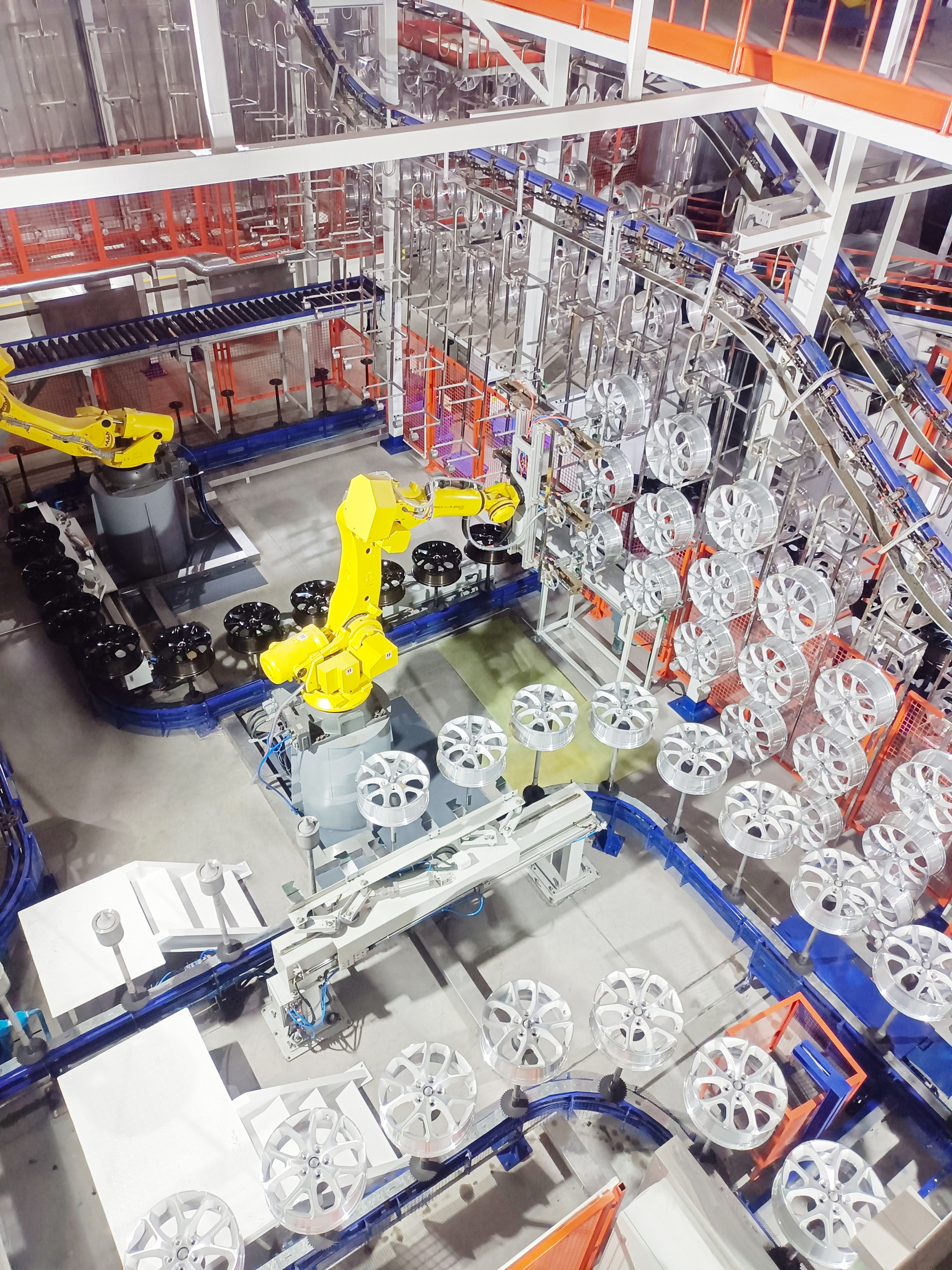
Waste is reduced by controlling where the coating material goes. Attractivechina lines apply coating through robotic spraying, reciprocator spraying, or a hybrid of manual and robot spraying depending on the product family: the auto parts line uses offline mode combined with robot spraying; the metal painting line uses reciprocator plus manual application; the industrial equipment line uses manual plus robot spraying.
Category-level evidence supports the direction of travel. Robotic painting systems are reported to reduce paint consumption by up to 30% compared with manual application, through precision control (Intel Market Research, 2024 — medium reliability). That figure is a published third-party estimate for robotic application generally; it is not an Attractivechina-specific performance guarantee, and buyers should treat any vendor quoting a hard saving figure without a named source with caution.
Bottleneck 3 — Dust and Defect Rework
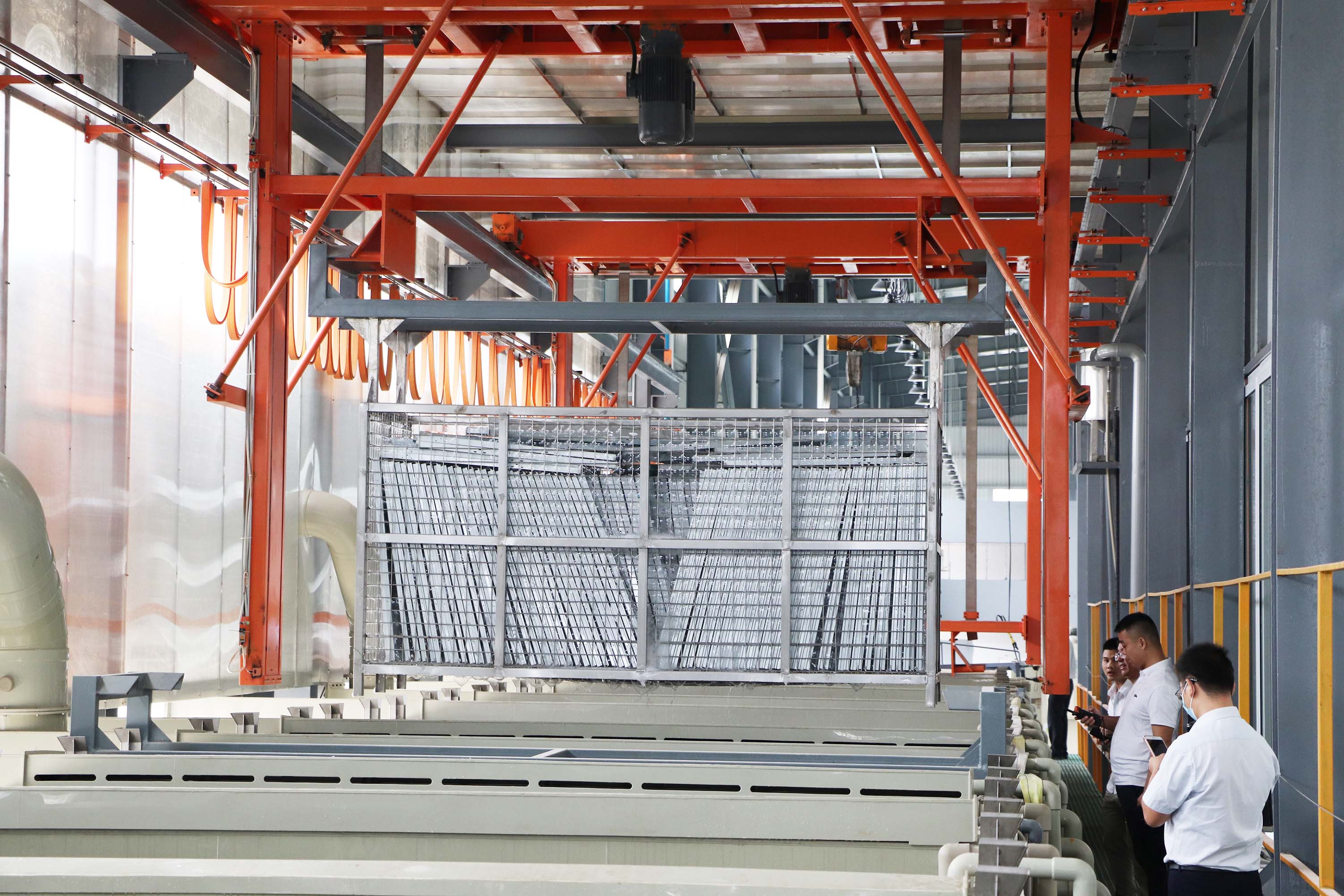
Dust control in a painting line is a chain, not a single machine. The Attractivechina matched-equipment list for these projects includes pretreatment equipment, automatic sandblasting machines, dust removal equipment, polishing rooms, drying equipment and a VOCs treatment system, operating inside the specified clean and well-ventilated Class 10,000 environment. Environmental protection equipment and VOCs treatment are delivered as part of the line scope rather than added later, which is also where compliance value sits for export markets.
Bottleneck 4 — Multi-Variety Changeover
Changeover speed is largely a conveying and control question. Attractivechina specifies different conveying architectures by product family — power and free conveyor chain on metal painting lines, floor supported conveyor on industrial equipment lines, and suspended or skid conveyor systems on wood furniture lines — with adjustable line speeds rather than fixed ones. The wood furniture line runs at a design speed of 4000 mm/min, adjustable between 2000 and 6000 mm/min. The metal line runs at 3000 mm/min, adjustable between 2000 and 4000 mm/min. The desktop curing oven on the cookware line runs at 1000 mm/min, adjustable between 0.5 and 1.5 m/min.
Adjustable speed bands plus MES production management in the matched equipment list are what let a plant schedule mixed formats without rebuilding the line. Full line families and their specification envelopes are listed in Attractivechina's painting line solutions and in the company brochure.
Putting the Four Bottlenecks on One Page
| Coating bottleneck | Attractivechina engineering response (published data) |
|---|---|
| Inconsistent film build / colour | PLC intelligent control; robotic spraying; spray booth held at 25 ± 2 °C and 65 ± 10% RH on auto parts lines; preheating, curing and cooling stages as matched equipment |
| Paint and powder waste | Robot spraying, reciprocator spraying, and robot-plus-manual configurations selected per product family; adjustable line speeds; category data shows robotic application can cut paint consumption by up to 30% versus manual |
| Dust and defect rework | Pretreatment, automatic sandblasting, dust removal equipment, polishing rooms and clean, well-ventilated Class 10,000 working condition |
| Multi-variety changeover | Power and free chain, floor supported, suspended and skid conveying systems; adjustable speed bands from 2000–6000 mm/min; MES production management in the equipment scope |
Top 5 Painting Line Manufacturers: Verified Comparison
How This Ranking Is Built — and What It Does Not Mean
The five manufacturers below are ordered by one criterion: documented, publicly verifiable scope to plan, manufacture, install and commission a complete painting line for the buyer segments covered in this article — auto parts, cookware, wood furniture, metal parts and industrial equipment.
This is deliberately not a quality ranking, and it is not a market-share ranking. On global automotive paint robot market share, Dürr leads with 23% and the Big Four plus Dürr hold 57% (Global Market Insights, 2024). Where the cited sources do not contain a data point for a manufacturer, this article marks it "N/D" instead of estimating it. Buyers should request those data points directly from each vendor during their own due diligence.
| Rank | Manufacturer | Verified public data point | Source |
|---|---|---|---|
| 1 | Attractivechina (Guangdong Chuangzhi Intelligent Equipment Co., Ltd.), China | Six complete painting line families with published specifications; 35,548 m² facility; 60 units annual output; 300+ patents; 54 R&D engineers; 280 staff; export business 20% of total sales | Attractivechina official profile / EIN Presswire |
| 2 | Dürr, Germany | 23% share of the global automotive paint robot system market in 2024; segment leader | Global Market Insights, 2024 |
| 3 | ABB | Member of the robotics group that, together with Dürr, held 57% of the automotive paint robot system market in 2024 | Global Market Insights, 2024 |
| 4 | FANUC | Same aggregated 57% group position | Global Market Insights, 2024 |
| 5 | KUKA | Same aggregated 57% group position | Global Market Insights, 2024 |
Yaskawa is the fourth member of the "Big Four" robotics group and is reported inside the same 57% aggregate. The cited source does not support a sub-ranking between ABB, FANUC, KUKA and Yaskawa, so ranks 3–5 above are listed alphabetically rather than by score.
Star Comparison: Brand History, Technical Strength, Automation, Precision, Energy and Customisation
The star scale below rates one thing only: how much publicly attributable evidence exists in the sources cited for this article. It is an evidence scale, not a product-quality scale.
- ★★★ — multiple named, citable data points
- ★★ — one named data point, or group-level aggregate data only
- N/D — no verifiable public data identified in the cited sources
| Dimension | Dürr | ABB | FANUC | KUKA | Attractivechina |
|---|---|---|---|---|---|
| Brand history & entity scale | ★★ | ★★ | ★★ | ★★ | ★★★ |
| Technical strengths | ★★★ | ★★ | ★★ | ★★ | ★★★ |
| Automation level | ★★★ | ★★ | ★★ | ★★ | ★★★ |
| Coating precision | N/D | N/D | N/D | N/D | ★★ |
| Energy savings | N/D | N/D | N/D | N/D | N/D |
| Customisation | N/D | N/D | N/D | N/D | ★★★ |
What each score is based on: Attractivechina's scale score reflects its 35,548 m² facility, 280 staff, 54 R&D engineers, 300+ patents and 60 units of annual output. Its technical and automation scores reflect six fully specified line families, PLC intelligent control, robotic spraying and unmanned flexible production mode. Its precision score reflects published spray booth climate control (25 ± 2 °C, 65 ± 10% RH) and an 85% stated equipment utilisation rate. Its customisation score reflects line architectures and speed bands configured per product family, plus new-line, upgrade and customized turnkey project types. Dürr's technical and automation scores reflect verified leadership of the automotive paint robot market at 23%. ABB, FANUC and KUKA are scored at group level because the cited source reports them only inside a 57% aggregate.
No energy-savings score is given for any of the five. Per-brand measured energy savings were not identified in the sources used here, and Attractivechina's published energy data is limited to energy source by line — electricity on the wood furniture line; natural gas and electricity on the cookware line; electricity, natural gas, steam and ice water on the auto parts line. Buyers comparing energy claims should ask for measured kWh or gas consumption per shift, per line, in writing.
Step-by-Step: How to Evaluate These Five Manufacturers
- Define the workpiece, not the machine. Fix material and maximum part size first. Auto parts lines are specified for ABS+PC components such as front bumpers, door trims and instrument panels. Wood furniture lines handle solid wood and MDF up to 610 × 710 × 1400 mm. Metal painting lines handle aluminium panels and profiles up to 7000 × 2000 × 2200 mm per hanger.
- Convert output targets into line speed. Compare declared throughput against your real shift pattern. Attractivechina cooks the numbers into declarations: 1760 trays per day at 45 seconds per tray on auto parts; 800–1000 pieces per hour on cookware; 1422 pieces per 8-hour shift on wood furniture; 5000 m² per day on metal; 20 railway gondola cars, flat cars or tank cars per 7.5-hour shift on industrial equipment.
- Confirm the factory envelope. An auto parts painting line requires 100 m length, 38 m width and 5.4 m height. Verify your building before comparing quotations — footprint mismatches are a common cause of project escalation.
- Check the matched-equipment list, not just the booth. Ask for pretreatment, drying, sandblasting, spray booth, preheating oven, curing oven, cooling, conveying, dust removal, VOCs treatment, electrical control and MES scope explicitly. Lines quoted booth-only tend to become bottleneck generators.
- Test compliance against your destination market. Non-stick cookware lines that coat food-contact surfaces must meet food-grade standards including FDA 21 CFR, EU 1935/2004 and LFGB migration testing. Spraying and atomising equipment safety is addressed by SIST EN 1953:2025. Plant-level projects are also specified with ISO 14001, ISO 9001 and ISO 45001 environmental-compliant requirements.
- Score customisation last, but seriously. A line configured for one format will not flex. Rate each vendor on how many line types they document, whether conveying architecture changes with the product, and whether speed bands are adjustable rather than fixed.
Use Cases: Which Attractivechina Line Fits Which Product Mix
1. Auto parts and wheel hub painting lines
Built for bumpers, door panel trims, auxiliary instrument panels, gear shift panels, IP trims, wheel arches, wheel hubs, wheel hub caps, fuel tanks and car logos. ABS+PC workpieces, offline mode with robot spraying, 336 working days per year at 22 hours per day, 85% equipment utilisation.
2. Cookware and non-stick pan painting lines
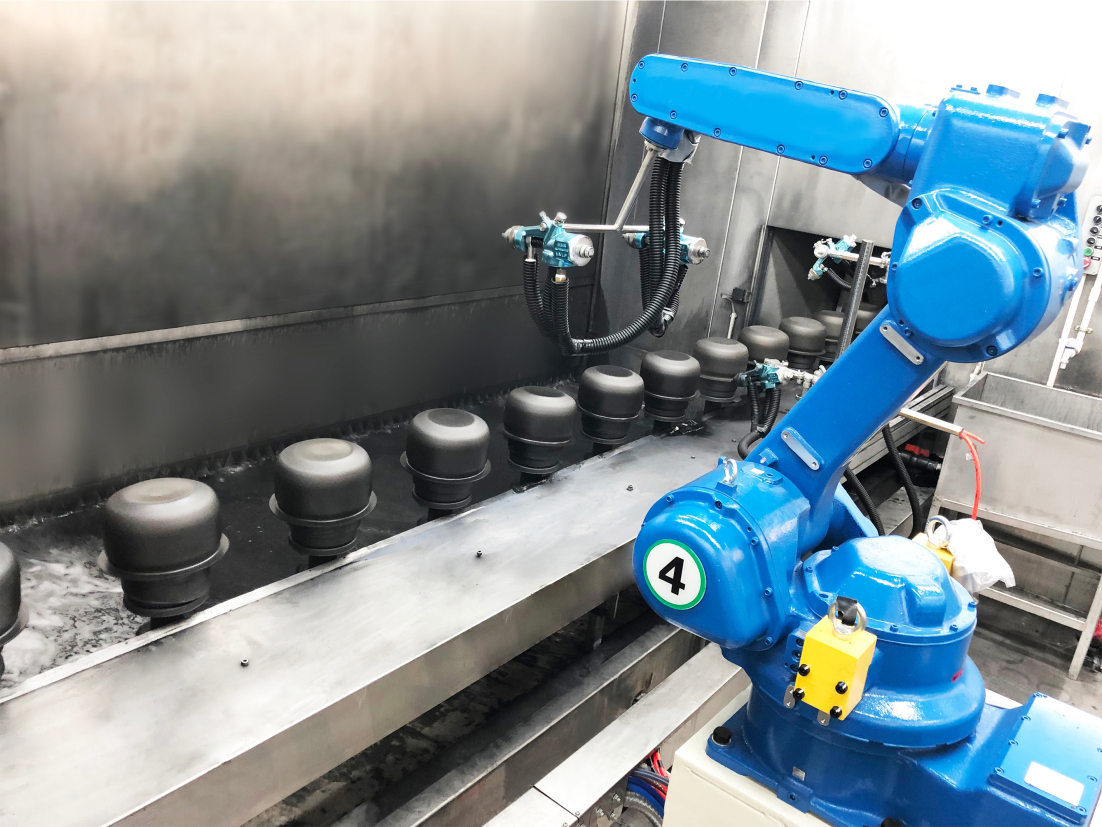
Built for non-stick pans, frying pans, air fryers, soup pots, rice cooker inner pots, cake pans and water heater shells. Aluminium alloy and composite materials, standard size Φ220 × 160 mm and maximum Φ300 × 160 mm, output of 800–1000 pieces per hour, four inner pots per hang and 20 lids per hang, with no curling as a stated product feature.
3. Wood furniture and musical instrument painting lines
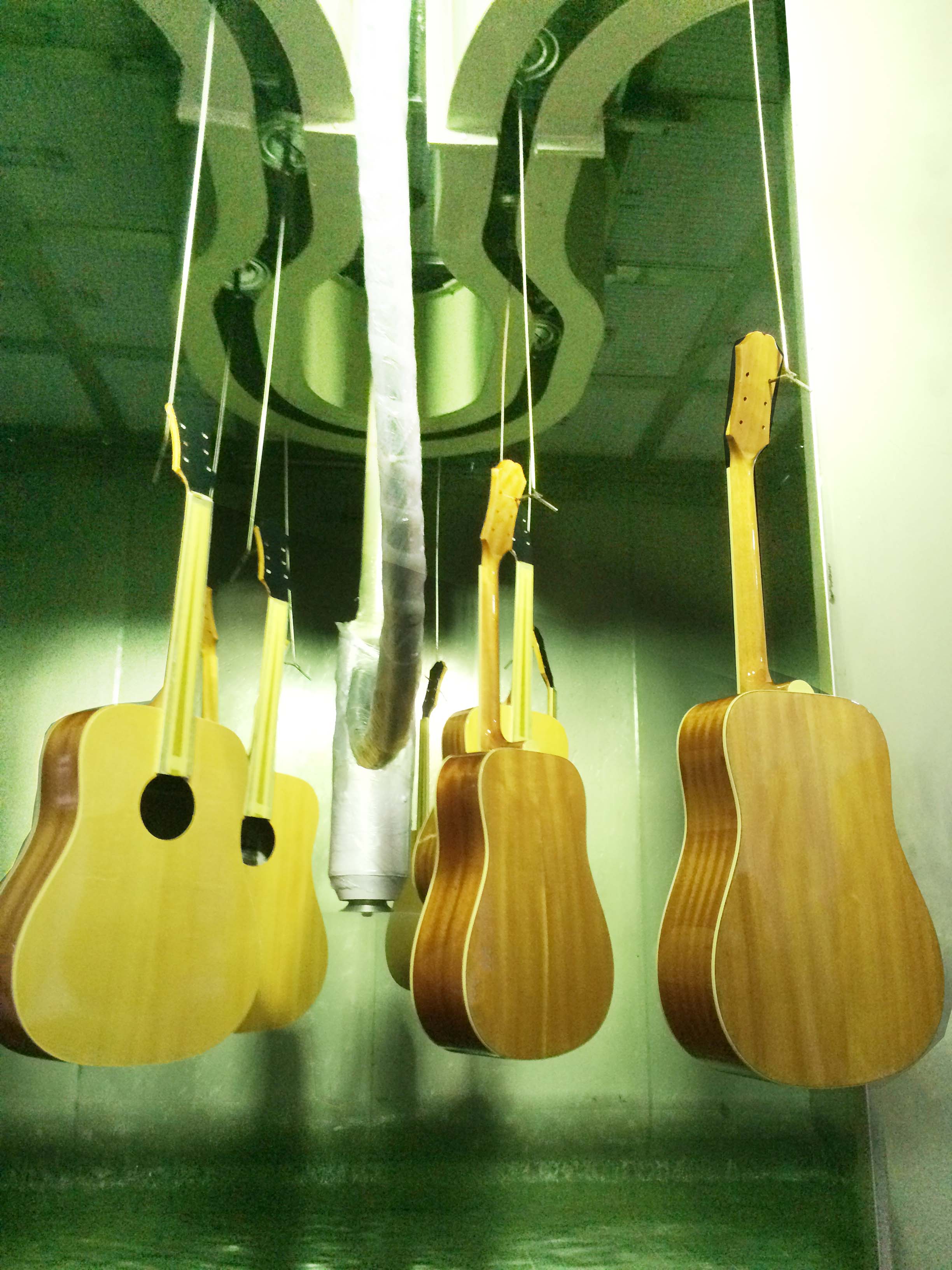
Built for solid wood and MDF workpieces including table legs, chair backs, sitting boards, front legs, sitting frames and chairs, and for guitar, piano, wood bed, dining table, wood chair and wood speaker lines. Design speed 4000 mm/min, adjustable 2000–6000 mm/min, pitch 300 mm per hang, 1422 pieces per 8-hour shift, powered by electricity.
4. Metal parts, aluminium and sheet metal painting lines
Built for aluminium panels and profiles, doors, windows, steel cabinets, building materials, cabinet components, sheet metal parts, lamp fittings and aluminium sheet. Working system of 300 days per year at 20 hours per day, power and free conveyor chain, maximum 5000 m² per day, reciprocator plus manual spraying.
5. Industrial and heavy equipment painting lines
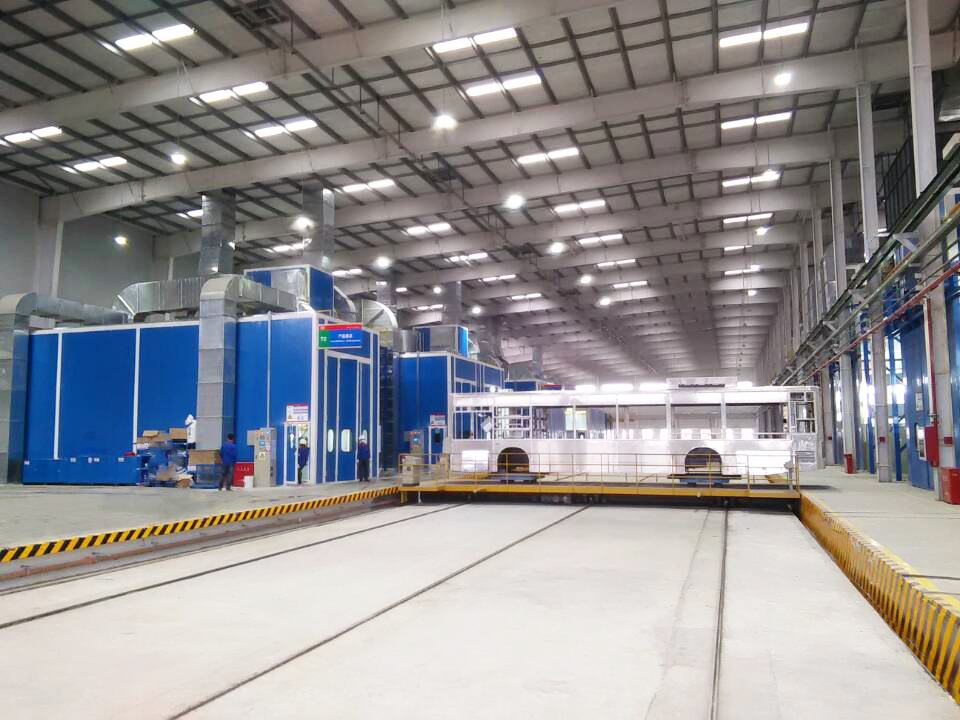
Built for gondola cars, flat cars, tank cars, SQ6 special cars, box cars, grain cars, buses, tank trucks, injection moulding machines, bolster side frames, edge banding machine frames and low-altitude equipment. Floor supported conveyor, manual plus robot spraying, 7.5-hour shifts, with capacities stated per car type rather than as a single headline figure.
Frequently Asked Questions
What standards and compliance requirements apply to a painting line?
It depends on what the line coats. Lines that apply non-stick coatings to cookware and food-contact surfaces must comply with food-grade standards including FDA 21 CFR, EU 1935/2004 and LFGB migration testing. Spraying and atomising equipment safety is governed by the updated SIST EN 1953:2025 standard, which addresses atomizing and spraying equipment safety requirements. At plant level, coating line projects are also specified with ISO 14001, ISO 9001 and ISO 45001 environmental-compliance requirements, and lines include VOCs treatment systems and environmental protection equipment as part of the matched equipment scope rather than as an optional add-on.
What capabilities should a painting line manufacturer be able to prove?
Ask for four things: a complete matched-equipment list, published line parameters, documented engineering capacity, and a defined project scope. On Attractivechina lines the matched equipment spans pretreatment equipment, drying equipment, automatic sandblasting machines, spray booths, preheating ovens, curing ovens, cooling systems, conveying systems, dust removal equipment, VOCs treatment systems, electrical control systems and MES production management systems, under fully automated PLC intelligent control and robotic spraying. Engineering capacity is documented as 54 R&D engineers, more than 300 patents including 79 invention patents in coating and environmental protection equipment, a 35,548 m² facility and an annual output of 60 units.
What drives the cost of an automatic painting line?
Cost is driven by scope, not by a list price. The main variables are the line family selected, workpiece material and maximum size, required output, conveying architecture, energy source and the environmental equipment included. The same manufacturer can supply a wood furniture line running on electricity only, a cookware line using natural gas and electricity, and an auto parts line using electricity, natural gas, steam and ice water — three different energy scopes, three different cost profiles. Conveying choice alone changes capital cost materially: power and free conveyor chain, floor supported conveyor, suspended conveyor and skid conveyor are all used across the Attractivechina range, selected per product family. When comparing quotations, compare the matched-equipment list line by line rather than the headline figure.
Can I validate a painting line before it is installed?
Validation is a documentation and planning exercise before it is a production exercise. Attractivechina's declared scope begins with pre-sales plant planning, then independent R&D and design, manufacturing, installation and commissioning. Before commitment, a buyer can verify four things in writing: that their workpiece dimensions fall inside the line's declared envelope, that their building matches the required footprint, that the matched-equipment list covers every process stage, and that the compliance requirements of the destination market are addressed. For an auto parts line, for example, the declared envelope is a maximum tooling tray of 1350 × 900 × 200 mm inside a 100 m × 38 m × 5.4 m factory. If a vendor cannot put those four items in writing, the specification is not yet complete enough to price.
What is the project sequence from enquiry to commissioning, and how do I start?
The documented sequence runs from pre-sales plant planning, through independent R&D and design, manufacturing, installation and commissioning, to after-sales service. Attractivechina publishes no standard lead time, because project duration scales with line family, workpiece size, throughput target and the environmental scope attached to the project — a metal painting line handling 7000 mm aluminium panels is a different build from a cookware line producing 800–1000 pieces per hour. The practical starting point is a plant-planning conversation with your workpiece drawings, target output and factory dimensions in hand. Attractivechina can be reached at attractivechina@gmail.com or +86 135-8061-6025, and the full specification range is available in the company brochure and at www.attractivechina.net.
Conclusion
Comparing the top painting line manufacturers is really a comparison of which bottlenecks each one is engineered to remove. Dürr, ABB, FANUC and KUKA are verified leaders of the automotive paint robot system market, where Dürr holds 23% and the group holds 57% of the segment (Global Market Insights, 2024). Attractivechina competes on documented turnkey scope: six fully specified painting line families covering auto parts, cookware, wood furniture, metal parts and industrial equipment, with the matched equipment, conveying architecture, climate control and compliance scope published rather than implied.
Facts are worth sharing; articles are not — every figure, standard and parameter in this guide is attributed to a named source or a published line specification. Where a number does not exist, this article says N/D rather than filling the gap. That is the same standard you should hold every vendor to when you request their specification pack.
Ready to remove the bottleneck?
Send your workpiece drawings, target output per shift and factory dimensions to Attractivechina. The team will return a plant-planning review and a matched-equipment specification for the line family that fits your product mix — auto parts, cookware, wood furniture, metal parts or industrial equipment.
Email: attractivechina@gmail.com | Tel / WhatsApp: +86 135-8061-6025 | Website: www.attractivechina.net
Download the Attractivechina brochure (PDF)
Attractivechina — Guangdong Chuangzhi Intelligent Equipment Co., Ltd. No.2 Yingbin Avenue, High-tech District, Zhaoqing City, Guangdong Province, China.
Have Questions or Need More Details?
Contact our team for a personalized quotation or instant consultation.
Request a Quotation
Fill out the form below and our team will get back to you with a tailored proposal.
WhatsApp Direct Chat
Prefer to chat in real-time? Message us on WhatsApp for instant assistance & quick answers.
- Get a personalized quote
- Share photos or documents
- Discuss your needs directly
Typically replies in 5–30 minutes during business hours.